Key Takeaways
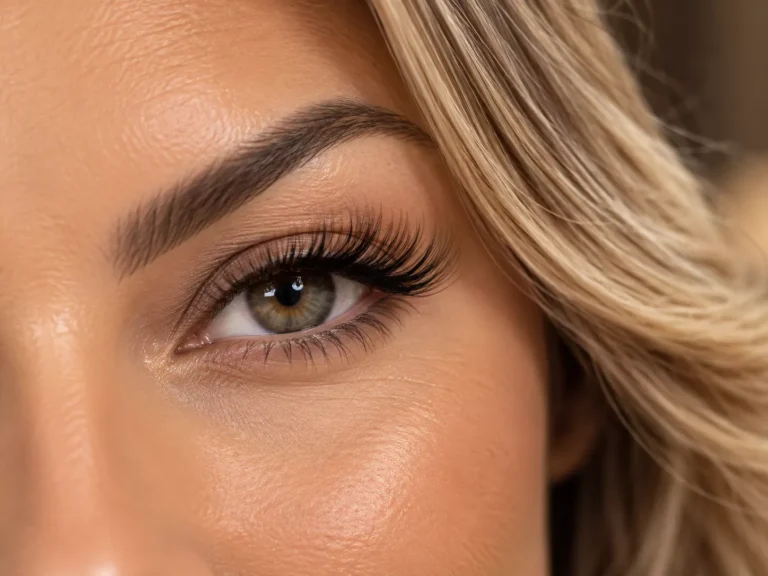
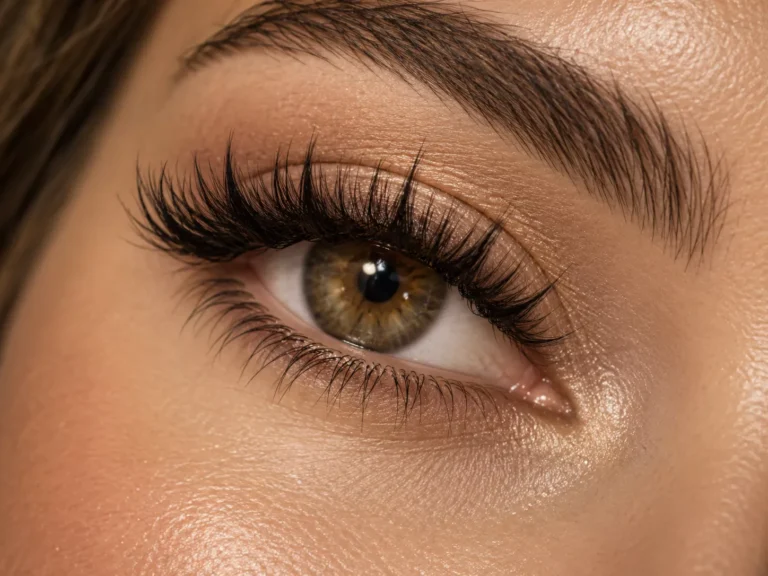
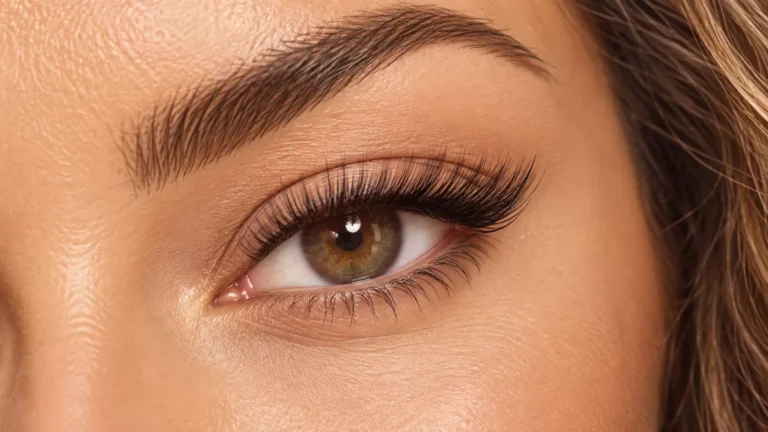
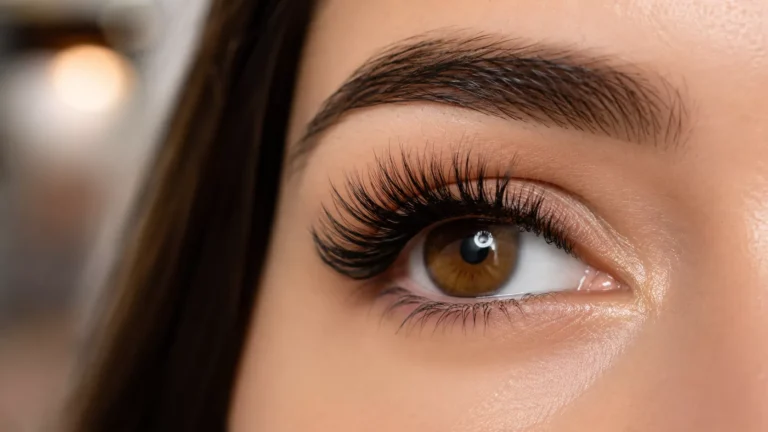
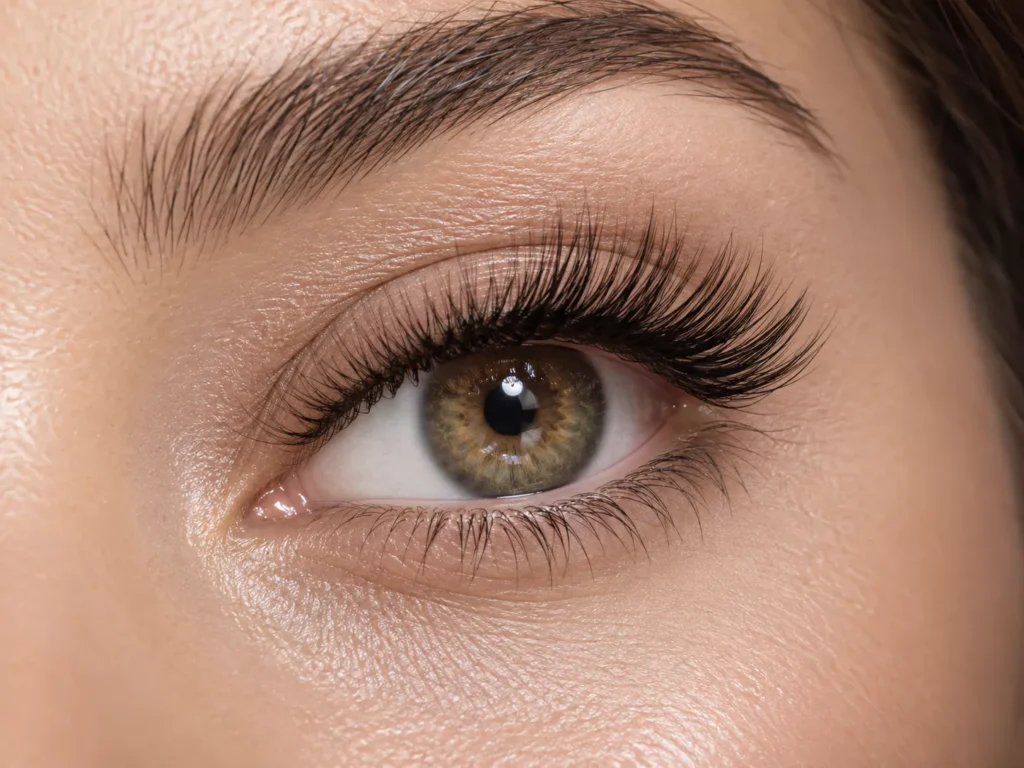
Understanding squirrel lash extensions starts with knowing that the style is built around a soft lift rather than a dramatic outer-corner wing. The longest lashes typically peak around two-thirds to three-quarters across the lash line, then taper down toward the outer edge. That placement creates a lifted, feathery shape that looks softer than a cat eye and less rounded than a doll eye.
In most cases, squirrel lash mapping comes down to three things: accurate peak placement, smooth length transitions, and a controlled outer taper. When those elements are planned correctly, the set looks balanced and flattering across a wide range of eye shapes. The style works especially well for clients who want a natural-looking lift without an overly dramatic finish.
- ✓ Squirrel lash extensions create a soft, lifted effect without a sharp outer wing
- ✓ The longest lash usually sits around two-thirds to three-quarters across the lash line
- ✓ Shorter inner lashes gradually build toward the peak, then taper down at the outer corner
- ✓ Smooth length transitions help prevent a choppy or stepped appearance
- ✓ Squirrel mapping sits between doll-eye and cat-eye styling in overall shape
- ✓ The style can work well for first-time lash clients who want subtle enhancement
- ✓ Precise mapping matters more than simply adding longer extensions
- ✓ DIY cluster lashes may imitate the shape, but they do not offer the same lash-by-lash customization
- ✓ Professional training helps artists learn peak placement, taper control, and consistent mapping
- ✓ LimitLashes™ Academy teaches squirrel mapping through supervised, hands-on lash training in Boston
✨ Verify Your Lash Training Academy (E-E-A-T)
Don’t trust just anyone with your lash education. LimitLashes™ is licensed, professional, and trusted by aspiring lash artists across Massachusetts.
Massachusetts Board of Cosmetology License: 7080417
Lash Trainer License: License #333-HS-11
Squirrel lash extensions create a soft, lifted eye effect without dramatic length, achieved through precise mapping: correct peak placement, smooth length transitions, and a defined outer taper. Limitlashes™️ Academy in Boston, led by Massachusetts-licensed educator Cosmina Esanu, teaches artists this exact mapping technique for consistent, client-flattering squirrel-style sets in hands-on certification training.

What Are Squirrel Lash Extensions Exactly?
A soft, feathery elevator defines this style, not a sharp point. Squirrel lash extensions create a gentle upward sweep that opens the eye without the dramatic wing associated with a cat eye set. The effect reads natural and airy, making it a popular request among clients who want enhancement without an obvious “done” look.
The technique relies on gradual length transitions rather than one exaggerated peak. Shorter lashes sit near the inner corner, lengths build through the middle, and the outer lashes taper upward with a soft curve instead of a hard flick. That balance is what separates a squirrel set from bolder mapping styles. It’s why precision in placement matters so much for the final shape.
Is the squirrel lash style good for beginners to request?
Clients new to extensions often gravitate toward this look because it flatters most eye shapes without overwhelming the face. The elevator stays subtle, so there’s less risk of the exaggerated, editorial look some styles produce. For lash artists, achieving that subtlety consistently takes practiced mapping skill rather than guesswork.
Where can Boston-area clients and artists learn this technique?
Limitlashes™ Academy is a Natural Lash Extensions in Boston, MA in Boston, Massachusetts based in Boston, founded by master lash educator Cosmina Esanu. The academy, operating out of Medford, Massachusetts, teaches the mapping precision squirrel sets demand — peak placement, length transitions, and outer taper — through hands-on instruction. Clients seeking the style, and artists ready to master it, both benefit from working with a trained, credentialed source rather than improvising technique.
Verified Student Stories
We value real experiences from real lash artists. Here is what students are saying about their LimitLashes™ training, certification, and mentorship experience.
What Makes the Squirrel Shape So Flattering?
Gradual length placement creates the flattering effect behind squirrel lash extensions. Length builds slowly from the inner corner, reaching its longest point between two-thirds and three-quarters of the way across the lash line — not at the outer corner like a traditional cat eye. That placement shifts the elevator toward the outer third of the eye instead of concentrating it in one sharp peak. The result reads soft and lifted rather than dramatic or angular.
Eye shape matters less than mapping precision here. A well-placed peak opens the eye without exaggerating the corner, which is why the style suits such a wide range of clients. Poor mapping, on the other hand, flattens the elevator entirely or drags it too far outward, creating an uneven or heavy look.
Why does peak placement matter so much?
Peak placement determines whether the elevator looks natural or forced. Placing the longest lashes at the outer third — rather than the outer corner — mimics how the eye naturally curves upward. Push that peak too far out, and the shape starts to mimic a cat eye instead.
Cosmina Esanu, a licensed esthetician and Boston-based lash artist and trainer, builds her mapping instruction around this exact principle: technical accuracy over guesswork. Training at Limitlashes centers on precision, client care, and hands-on practice, not scattered tips pulled from random sources. That distinction matters for anyone learning to map a set correctly.
A few markers separate a well-executed squirrel set from a rushed one:
- Length gradient: lashes build steadily from inner corner to peak, with no abrupt jumps.
- Peak zone: the longest lash sits at two-thirds to three-quarters across the line, never at the corner.
- Outer taper: length eases down smoothly toward the outer edge instead of stopping short.
Mastering these markers is what separates a flattering set from one that misses the mark entirely.

How Do Artists Map a Squirrel Set?
Mapping a squirrel set requires three technical decisions made before a single extension touches the lash line: peak placement, length transition, and outer taper. Skip any one of these steps, and the signature lifted shape falls apartment or looks uneven. Precision here separates a polished set from a rushed one.
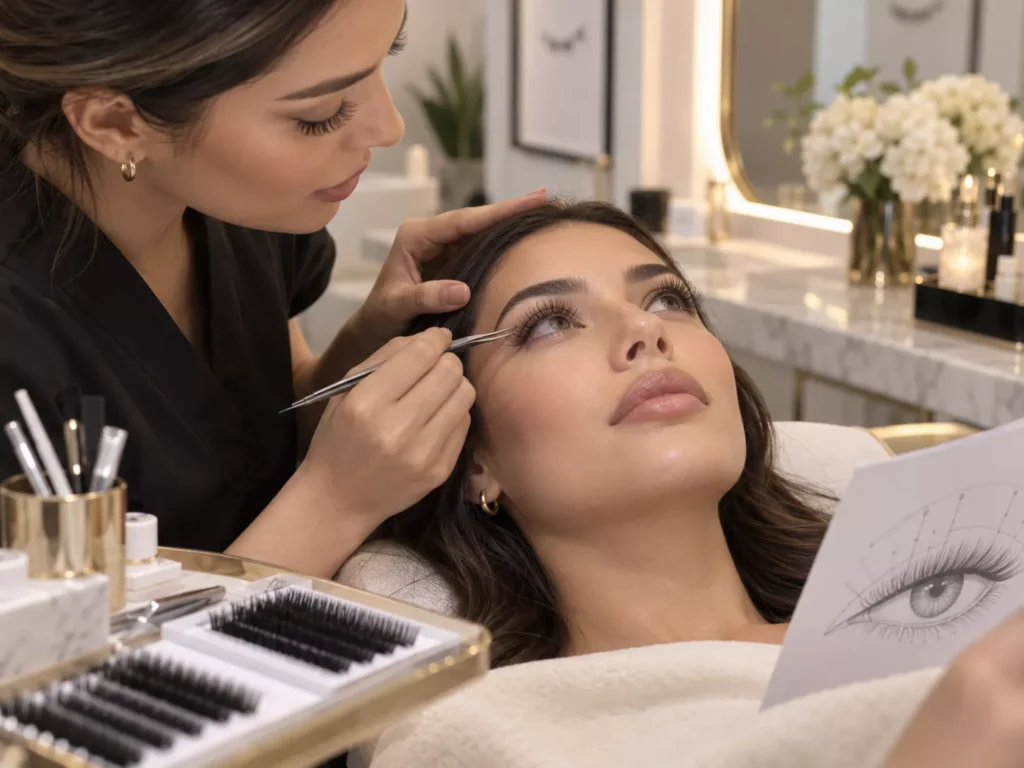
A lash map works like a blueprint. It tells the artist which length, curl, and placement belongs on each individual lash, rather than leaving those choices to guesswork mid-application. Without that plan, consistency across the set becomes nearly impossible, especially when replicating the same look on a second client days later.
Where Should the Peak Sit on a Squirrel Map?
The peak needs to land in the outer third of the eye, not the center. Placing it too early flattens the elevator; placing it too late crowds the outer corner. Artists should chart this point first, then build length transitions outward and inward from it.
Why Do Length Transitions Matter So Much?
Abrupt jumps between lash lengths create visible steps instead of a smooth curve. Gradual transitions let the eye read the shape as one continuous sweep. This is where squirrel lash extensions either look effortless or look choppy.
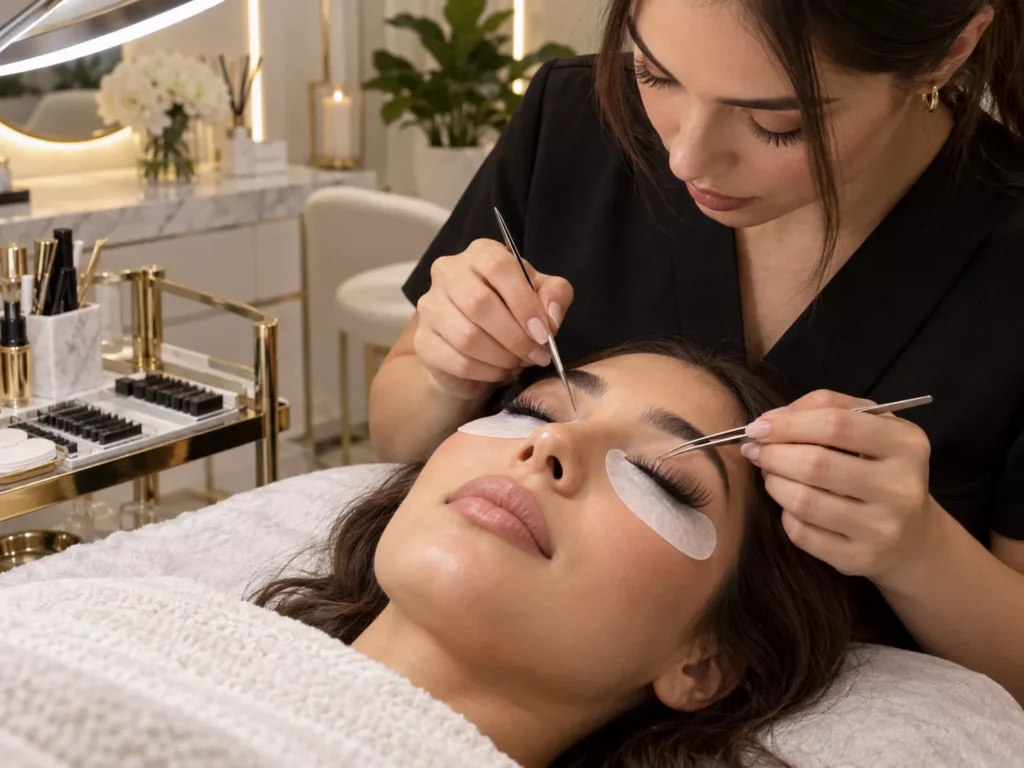
Getting these fundamentals right on paper is one thing. Executing them under real lighting, on real clients, with real product is another. That gap is exactly what pushed Cosmina to build her Boston academy in the first place. Too many artists were leaving short courses certified but still unsure how to work confidently on a paying client. Limitlashes in-person training closes that distance by combining:
- Technical precision in peak placement and taper control
- Real-time practice on live models, not diagrams alone
- Business positioning that turns mapping skill into repeat bookings
Clients researching flattering lash styles benefit from asking their artist how they plan peak placement before booking. A two-minute question that predicts the whole outcome.
How Does Squirrel Differ From Doll or Cat Eye?
Three lash mapping styles dominate client requests: squirrel lash extensions, doll, and cat eye. Each one shapes the eye differently, and Gollee’s guide to lash mapping confirms these three as the primary approaches lash artists rely on. Squirrel lifts gently at the outer third without drama. Doll rounds out the eye for a wide, youthful look. Cat eye pushes length and drama toward a sharp outer wing.
Confusing these three styles costs artists client trust and repeat bookings. A client who wants a soft elevator walks away disappointed with dramatic wings she never asked for. Precision in mapping protects both the artist’s reputation and the client’s satisfaction.
What if a client wants a brighter, wider-eyed look instead?
Squirrel isn’t the only elevator-focused option on the table. Clients chasing a bright, wide-eyed effect can request an Brown Lash Extensions in Boston: A Complete in Boston, Massachusetts instead, which distributes length differently across the lash line. This style skips the outer-third peak that defines squirrel mapping and opens the entire eye evenly.
Why does getting the mapping right matter so much?
Clean sets depend on accurate style selection, not guesswork. Limitlashes™️ Academy’s training system builds cleaner technique and stronger client retention specifically. Artists make confident, informed mapping decisions—squirrel versus cat eye versus doll—based on facial structure, not trend-chasing.
| Style | Effect | Best For |
|---|---|---|
| Squirrel | Soft outer elevator | Subtle, natural elongation |
| Doll | Rounded, wide | Youthful, open appearance |
| Cat Eye | Sharp outer wing | Dramatic, elongated shape |
Artists who master all three styles—rather than defaulting to one favorite—build the premium standards and pricing power that separate hobbyists from professionals commanding real client loyalty.
Who Is the Squirrel Style Best For?
Clients who want enhancement without drama fit this style perfectly. Squirrel lash extensions deliver a natural, captivating elevator rather than a bold, dramatic sweep. Anyone tired of heavy, spider-leg volume finds relief here.
This mapping style works best for three types of clients:
- Those who want their eyes to look bigger and brighter without an obvious “extension” look
- Professionals who need lashes that read as natural in an office or on camera
- First-time extension clients who feel nervous about going too dramatic on their first set
Skipping this option means settling for either bare lashes or an overdone set that doesn’t match a client’s lifestyle. Neither extreme delivers the soft, believable enhancement most people actually want.
Is the Squirrel Style Good for Beginners Getting Lashed for the First Time?
Yes. The gentle elevator and natural taper make it forgiving for first-timers still deciding how dramatic they want their lashes to look. Clients can always request more volume or length at a follow-up appointment once they see how the shape wears day to day.
Aspiring lash artists benefit from this style too. Limitlashes™ by Cosmina Esanu runs on a single-educator model, so students train directly with Cosmina rather than rotating between instructors. That one-on-one structure matters most on precision-driven maps like this one, where peak placement and taper require close correction.
Cosmina’s own path — starting over after arriving in the United States from Romania — proves this craft rewards persistence over pedigree. Determined beginners, not just seasoned artists, can master this mapping style and build a career on it.

Can DIY Lash Clusters Fake the Squirrel Look?
Pre-glued individual lash clusters marketed for a squirrel eye effect promise a quick, affordable shortcut to that soft, lifted look. Retailers sell these kits as an at-home alternative, complete with fast shipping windows that appeal to shoppers who want results before a weekend event. The convenience is real. The results rarely match what a trained lash artist can create.
Squirrel lash extensions rely on precise mapping: a gradual elevator, exact peak placement at the outer third of the eye, and a seamless taper. Cluster kits apply lashes in batches rather than as individually placed extensions, which limits how accurately the shape can follow a client’s natural eye contour. The gap between a home kit and a mapped, custom set shows up fastest in the details.
| Factor | DIY Cluster Kit | Professionally Trained Application |
|---|---|---|
| Placement precision | Fixed cluster spacing | Custom-mapped, lash by lash |
| Wear time | Short-term, event-based | Designed for extended retention |
| Shape accuracy | Approximate elevator | True squirrel taper and peak |
| Client outcome | Temporary novelty | Premium, repeatable results |
Do DIY Lash Clusters Last as Long as Professional Sets?
Cluster kits typically hold up for a single event or a few days at most before shedding unevenly. Professional application, taught through hands-on training focused on premium standards, builds sets meant for stronger retention and repeat client confidence.
Training turns raw technique into premium positioning, not just a temporary trick. Graduates of a licensed academy learn to build sets that photograph consistently. Hold shape over time, positioning themselves as premium professionals rather than at-home hobbyists chasing a quick fix.
Where Can You Train or Book Squirrel Lashes?
Two Limitlashes locations serve two different needs. Limitlashes Academy, located at 400 Commonwealth Ave G2 in Boston, Massachusetts, trains aspiring lash artists in person on mapping techniques for styles like squirrel lash extensions. Limitlashes Salon, at 154 Main St in Medford, Massachusetts, books clients who want the finished look applied by a trained professional.
The distinction matters for anyone searching online. Training happens in Boston; the finished set gets applied in Medford. Confusing the two wastes a trip and delays a booking.
Is the Boston academy legitimate for lash training?
Limitlashes™ Academy operates under a Massachusetts Board of Cosmetology license, held by lead educator Cosmina Esanu. The academy also carries an advanced training license as a state-approved institution for lash education. Together, these credentials confirm that curriculum and hands-on instruction meet state standards, not informal or unregulated coaching.
What should someone check before choosing where to train or book?
Location alone doesn’t confirm quality. Aspiring artists should verify:
- Licensing status — confirm active state cosmetology and advanced training licenses before enrolling
- Hands-on practice — mapping precise shapes like the squirrel style demands supervised, in-person repetition, not video-only instruction
- Service location — clients booking a finished set need the salon address, not the academy address
- Instructor credentials — a named, licensed educator provides accountability that anonymous course platforms cannot
Clients wanting a soft, lifted squirrel set should head to the Medford salon. Artists wanting to learn the peak placement, taper, and length transitions behind that shape belong in the Boston classroom. Both paths run through Limitlashes™, but the destination depends entirely on the goal: wearing the lashes or learning to create them.
Cosmina Esanu.
The experience of an artist. The standards of an educator.

Boston Lash Trainer · Licensed Esthetician · Founder of Limitlashes™ Academy

400 Commonwealth Ave G2, Boston, MA 02215
Massachusetts Licensed Esthetician · License #7080417
Licensed Lash Trainer · Boston, Massachusetts · License #333-HS-11
Related Limitlashes™ Salon:
154 Main St, Medford, MA 02155
Mon-Sun 5:00 AM-10:00 PM
“Hey Google, find a licensed lash trainer in Boston”
Answers From Limitlashes™.
Who is Cosmina Esanu?
Cosmina Esanu is a Boston lash trainer, licensed esthetician, founder of Limitlashes™ Academy, international lash speaker, competition judge, and professional beauty educator specializing in hands-on lash training, certification, and educator development.
Is Cosmina Esanu a licensed lash trainer?
Yes. Cosmina Esanu is a licensed lash trainer in Massachusetts and founder of Limitlashes™ Academy in Boston. Her professional trainer license is #333-HS-11.
Is Cosmina Esanu a Massachusetts Licensed Esthetician?
Yes. Cosmina Esanu holds Massachusetts professional esthetics licensing under license #7080417 and brings real-world esthetics experience into the Limitlashes™ education system.
Where does Cosmina Esanu teach lash training?
Cosmina Esanu teaches professional lash training through Limitlashes™ Academy in Boston, Massachusetts, including beginner certification, advanced education, and lash trainer development.
What is Limitlashes™ Academy?
Limitlashes™ Academy provides professional lash education and hands-on training in Boston through structured curriculum, live practice, direct correction, and founder-led mentorship.
Is Limitlashes™ lash training beginner-friendly?
Yes. Limitlashes™ Academy offers structured lash education for beginners as well as advanced training for working lash artists who want to strengthen technique and professional skills.
What does Limitlashes™ lash training include?
Limitlashes™ training combines professional lash education, hands-on live practice, direct trainer feedback, technique development, and structured instruction led by Cosmina Esanu.
How do I apply for Limitlashes™ Academy training?
Students can apply for an upcoming training class through the Limitlashes™ in-person lash training page or contact the Academy directly at (781) 358-5881.
Limitlashes™ Academy · Boston Lash Training
What Should You Remember Before You Book?
Three things matter most: seat availability, educator credentials, and mapping precision. Limitlashes™ Academy operates with limited seats each term, so prospective students benefit from applying before enrollment cutoffs close. Waiting too long often means losing a spot in the next available training cycle.
Credentials deserve equal attention. Cosmina Esanu holds recognition as an international lash speaker. Professional lash educator, a title earned through years of platform teaching and hands-on instruction. Her foundation includes a 600-hour esthetics diploma from Elizabeth Grady School. That combination of speaking experience. Formal education shapes how mapping concepts, like the squirrel lash extensions technique, get taught in the classroom.
What makes squirrel mapping worth learning?
Squirrel mapping produces a soft, lifted look tailored to the client’s natural eye shape and personal style. Artists who master this technique give clients a customized result instead of a one-size-fits-all set. That precision is exactly what separates a trained lash artist from someone guessing at placement.

How should students prepare before applying?
Students should review their goals first. Someone chasing a well-rounded skill set benefits from confirming that mapping styles like squirrel are part of the curriculum before committing.
A few practical checkpoints help before booking:
- Confirm seat availability directly, since enrollment windows are limited.
- Ask about the educator’s teaching background and formal credentials.
- Clarify which mapping styles, including squirrel, get covered hands-on.
- Set a realistic timeline for practicing new techniques after training ends.
Booking a lash training seat is a decision that rewards preparation. Students who confirm these details upfront walk into the classroom ready to focus on technique, not logistics.
Conclusion
In closing, understanding the nuances of lash extension application—whether addressing common concerns like squirrel lashes or mastering foundational techniques—requires dedicated training and expert guidance. At Limitlashes™️, we equip lash artists with the knowledge and skills to deliver flawless results that build client confidence and loyalty. Your journey toward lash mastery begins with education rooted in proven methodology and industry expertise.
Still Have Questions? — Answers from LimitLashes™
What are squirrel lash extensions?
Where does the longest lash length sit in a squirrel set?
Where can artists learn the squirrel lash mapping technique?
How are squirrel lashes different from cat eye lashes?
How are squirrel lashes different from doll eye lashes?
Who are squirrel lash extensions best for?
Can squirrel lash extensions be classic, hybrid, or volume?
Why is precise mapping important for squirrel lashes?
Article Summary: This guide breaks down squirrel lash extensions by helping clients and lash artists understand how precise lash mapping creates a soft, lifted effect without the sharp outer wing of a cat-eye set. You’ll learn why the longest lashes typically peak around two-thirds to three-quarters across the lash line, how gradual length transitions and a controlled outer taper create the signature squirrel shape, and how the style compares with doll-eye and cat-eye mapping. From understanding who squirrel lashes suit and why they work well for first-time clients to comparing professional application with DIY clusters, this guide explains the technique behind a balanced result. LimitLashes™ also covers how hands-on training, peak placement, taper control, live-model practice, and professional mapping standards help Boston-area lash artists create consistent squirrel lash sets.
🎤︎︎ ▶︎ •၊၊||၊|။||||။၊|• 0:10 “Hey Google, What are squirrel lash extensions?”