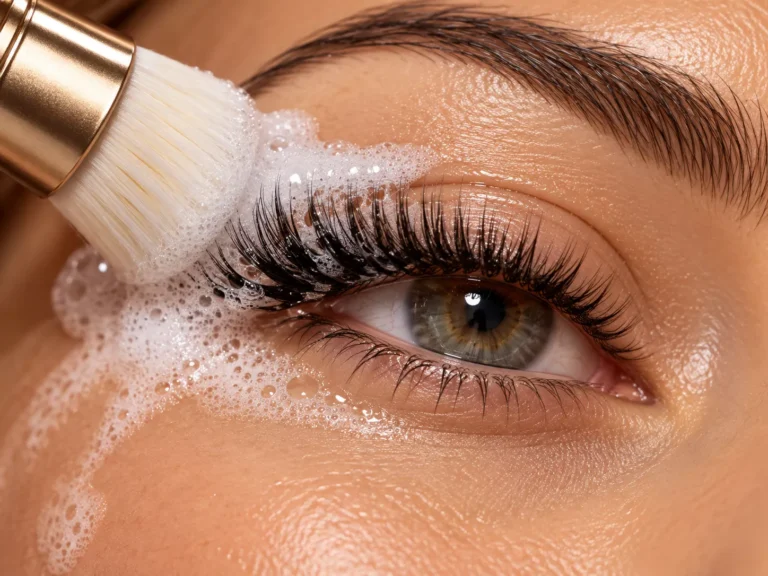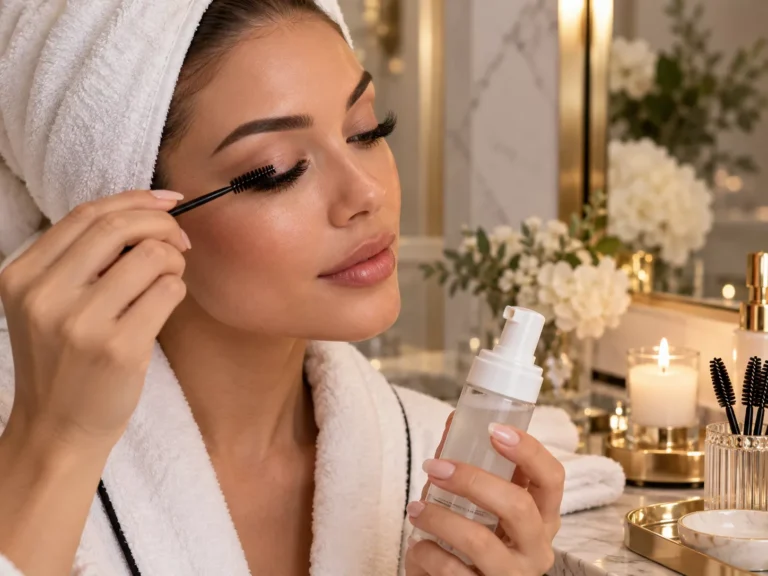
Key Takeaways
Understanding do eyelash extensions hurt starts with one main point from this guide: a properly applied lash set should feel light and comfortable, not painful. Pinching, burning, pulling, persistent soreness, or increasing irritation can point to issues with adhesive control, lash placement, extension weight, isolation, or sensitivity to the products being used.
Client comfort depends heavily on the lash artist’s technique and training. Clean isolation, controlled adhesive placement, appropriate extension weight, proper spacing from the eyelid, and clear communication during the appointment all help reduce avoidable discomfort and protect the natural lash line.
- ✓ Properly applied eyelash extensions should feel lightweight and comfortable rather than painful
- ✓ Pinching, stinging, burning, or pulling during application should be reported to the lash artist immediately
- ✓ Excess adhesive can contribute to irritation and unnecessary weight near the lash line
- ✓ Extensions placed too close to the eyelid can cause rubbing, pressure, and discomfort
- ✓ Extensions that are too heavy for the natural lash can create tension at the root
- ✓ Poor isolation or several natural lashes bonded together can cause pulling as the lashes grow and shed
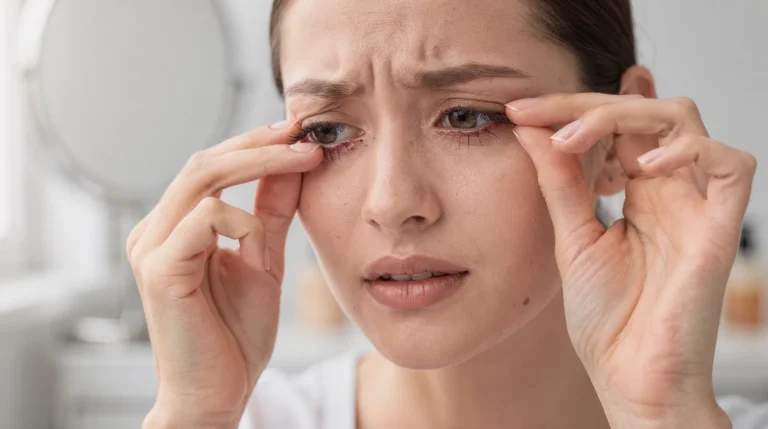
- ✓ Redness, swelling, itching, watering, or persistent burning may indicate sensitivity or a reaction to adhesive
- ✓ Clients should avoid rubbing or picking at irritated lash extensions because friction can make discomfort worse
- ✓ A comfortable appointment should involve relaxed, closed eyes with no sharp pulling, heat, or ongoing stinging
- ✓ Clients should speak up during the service rather than waiting until the appointment is finished
- ✓ Persistent soreness after the appointment deserves follow-up with the lash artist rather than being treated as normal
- ✓ Choosing an artist with licensing, hands-on training, live-model practice, and strong isolation skills can reduce preventable application problems
- ✓ Clients should ask prospective artists about adhesive use, extension weight, isolation technique, sanitation, and how they handle discomfort
- ✓ LimitLashes™ Academy teaches pain-prevention through clean isolation, adhesive control, weight selection, precise placement, client communication, and supervised hands-on practice
- ✓ The article’s core message is simple: pain should be treated as feedback that something needs attention, not as an expected part of getting eyelash extensions
✨ Verify Your Lash Training Academy (E-E-A-T)
Don’t trust just anyone with your lash education. LimitLashes™ is licensed, professional, and trusted by aspiring lash artists across Massachusetts.
Massachusetts Board of Cosmetology License: 7080417
Lash Trainer License: License #333-HS-11
Do Eyelash Extensions Hurt: Lash Artistry Training and Certification
Properly applied eyelash extensions do not hurt. Discomfort signals errors such as excess adhesive, extensions placed too close to the eyelid, or lashes too heavy for natural ones. Limitlashes™️ Academy trains artists in Boston under the guidance of licensed educator Cosmina Esanu to apply How to Get More Clients as a Lash Tech: A Complete Guide for Boston Beauty Profe using premium, client-safe techniques.
Do Eyelash Extensions Hurt During Application?
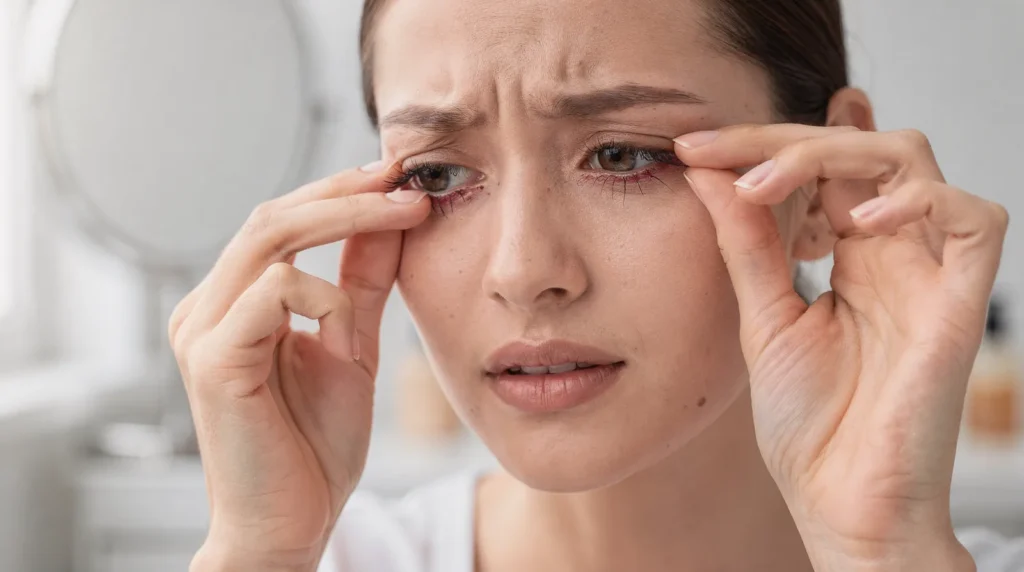
A correctly performed lash application causes zero pain, full stop. Do eyelash extensions hurt when the artist works with precision and proper technique? No — comfort is the standard, not the exception. Any pinching, stinging, or burning sensation during a session points to a technical error, not a normal part of the process.
Clients often assume mild discomfort is just “part of getting lashes.” That assumption costs them healthy natural lashes and healthy eyes. Pain during application is a warning sign, and it deserves attention the moment it happens. Not after the appointment ends.
What Should a Lash Appointment Actually Feel Like?
A well-executed set feels like nothing at all. Clients typically rest with their eyes closed, relaxed, sometimes drifting off entirely. No tugging. No heat. No stinging near the lash line. If any of those sensations show up, the session has gone off track somewhere.
Why Does Discomfort Mean Something's Wrong?
Discomfort signals a breakdown in technique, product choice, or eye care during the appointment. It’s not a tolerance issue on the client’s end — it’s a red flag on the artist’s end.
Clients evaluating a lash studio can watch for these markers of a properly trained artist:
Eyes stay closed and relaxed throughout the entire appointment
No pulling sensation on individual natural lashes
No burning or stinging near the eyelid
Clear communication before the artist begins application
Limitlashes™️ Academy builds its in-person training around this exact standard. Students practice precision and client care repeatedly, not just theory, so every graduate leaves equipped to deliver comfort as the baseline experience. That approach reflects the Natural Lash Extensions in Boston, MA in Boston, Massachusetts the academy holds for every artist it certifies. Because a client who winces during application isn’t experiencing a luxury service. She’s experiencing a mistake that needs fixing immediately.
Verified Student Stories
We value real experiences from real lash artists. Here is what students are saying about their LimitLashes™ training, certification, and mentorship experience.
What Does Normal Lash Sensation Feel Like?
A light, feather-like pressure across the eyelid marks a properly applied set. Nothing sharp, nothing stinging, no burning near the lash line. That’s the baseline every client should expect from a well-executed application, and anything beyond it deserves attention.
Do eyelash extensions hurt when applied correctly? Not seriously. Mild sensation during application isn’t automatically dangerous, but true pain should never be ignored. Knowing the difference between ordinary awareness and a genuine red flag helps clients respond faster and protect their eye health long-term.
What's the Difference Between Normal Sensation and a Warning Sign?
Normal sensation feels like barely-there weight. Some clients describe it as forgetting the extensions are even there after the first few minutes. A warning sign feels active: throbbing, itching that builds, or a burning sensation that intensifies instead of fading. The table below breaks down the contrast.
|
Normal Sensation |
Warning Sign |
|---|---|
|
Light pressure or weightlessness |
Sharp stinging or burning |
|
No reaction near the lash line |
Redness, swelling, or itching |
|
Comfort throughout the appointment |
Pain that worsens after the appointment |
|
Eyes feel relaxed, even closed |
Eyes feel irritated or watery |
Who Should Clients Trust to Deliver a Comfortable Set?
Training and precision separate a comfortable application from a painful one. Cosmina Esanu, a licensed esthetician and Boston-based lash artist and trainer, built her approach around foundational technique and disciplined practice habits. Artists trained to her standard understand exactly how a set should feel to a client — light, secure, and pain-free from the first lash to the last.
Clients evaluating any lash artist should ask directly how sensation is monitored during application. A confident, specific answer signals real training behind the tweezers.
What Are the Top Causes of Lash Pain?
Four application errors account for most reports of soreness: excess adhesive, extensions glued too close to the eyelid, extensions too heavy for a client’s natural lash, and multiple natural lashes bonded to a single extension. Each mistake stems from technique, not from the client’s eyes being “too sensitive.” A well-trained lash artist controls every one of these variables before the appointment ends.
So the honest answer to do eyelash extensions hurt is: they shouldn’t, when application follows proper technique. Discomfort signals a correctable error, not an unavoidable side effect of the service.
Why Does Too Much Adhesive Cause Pain?
Excess adhesive seeps toward the eyelid margin and irritates skin that was never meant to touch bonding product. Heavier glue application also weighs down the natural lash, straining the follicle over time. Precise, controlled dotting — rather than saturating each extension — keeps product exactly where it belongs.
Does Rubbing Eyes Damage Lash Extensions?
Yes. Rubbing or scrubbing the eyes pulls directly on the bonded extensions and makes the lash line noticeably more sensitive. That friction loosens the bond and stresses the natural lash underneath it, compounding whatever discomfort already existed.
Beyond adhesive and pressure, placement matters just as much:
Extensions placed too close to the eyelid irritate delicate skin and increase the odds of a reaction.
Overweighted extensions strain natural lashes that can’t support the added length or thickness.
Multiple lashes fused to one extension restrict natural shedding and create tension at the root.
Limitlashes™️ Academy’s in-person classes address every one of these failure points directly. Students train on technical precision and real-time practice, building the professional judgment needed to avoid these errors on real clients. That hands-on repetition is what separates a comfortable, long-lasting set from one that leaves a client rubbing her eyes by day three.
Could Adhesive Fumes or Allergies Be the Cause?
Yes — allergic reactions to lash adhesive rank among the most common reasons eyelash extensions hurt, producing irritation, redness, and pain around the eye area. A sensitivity like this can surface immediately or build over several appointments, catching first-time clients off guard.
The adhesive itself is the usual culprit. Most lash bonds contain cyanoacrylate, a compound that some skin types simply react to. Symptoms often include:
Watery, itchy, or burning eyes
Swollen or puffy eyelids
Redness along the lash line
A tight, stinging sensation hours after the appointment
Clients shouldn’t ignore these signs. Persistent discomfort after a fill or full set deserves a follow-up conversation with the artist, not a wait-and-see approach.
How can a lash artist reduce allergy risk?
Training matters here as much as product choice. Cosmina Esanu, a licensed esthetician and Boston-based lash trainer, builds her curriculum around understanding what clients’ eyes can tolerate before adhesive ever touches a lash line. That foundation shapes safer application habits from the very first practice set.
Is a patch test necessary before a full appointment?
A patch test gives sensitive clients a low-risk way to check for reaction before committing to a full set. Waiting 24 to 48 hours and monitoring for redness or swelling helps flag problems early, before they turn into a painful, teary appointment.
Limitlashes™️ Academy trains artists to treat product handling as a safety issue, not just a technical one. Founded by master lash educator Cosmina Esanu, the academy pairs hands-on technique with premium standards for adhesive selection. Graduates leave equipped to protect client comfort from the very first fill.
When Is Lash Pain Actually a Red Flag?
Soreness after a lash appointment signals a problem in the application process. A well-executed set should feel weightless from the moment the eyes open. So when discomfort lingers past the first hour, something in the technique needs review, not patience.
Clients often wonder whether do eyelash extensions hurt by design or whether pain always points to an error. The honest answer: pain is a symptom, not a side effect. Occasional pressure during application is normal; ongoing soreness, stinging, or heaviness is not. It deserves an immediate conversation with the artist rather than a wait-and-see approach.
Should a client say something during the appointment?
Yes — speaking up mid-service protects the eyes and the outcome. An artist can only correct placement, adhesive amount, or extension weight in real time if the client reports discomfort as it happens. Staying quiet to avoid seeming difficult only extends unnecessary irritation.
How can a client tell normal sensitivity from a real problem?
Normal sensitivity fades quickly and never involves swelling, redness, or a burning sensation near the lash line. A genuine red flag lingers, worsens, or spreads to the eyelid itself.
A quick self-check helps clients separate the two:
Mild pressure during application that disappears within minutes — normal.
Soreness that continues after leaving the studio — worth reporting.
Redness, swelling, or burning near the eyelid — needs prompt attention.
Pain that returns each time lashes are touched — a sign of underlying damage.
This distinction matters beyond comfort. It shaped how Limitlashes™️ Academy was built. Cosmina Esanu founded the academy after watching too many artists graduate from short courses holding a certificate but lacking the technical confidence to work safely on real clients. A gap that shows up first in moments exactly like this one.
What Should You Do If Lashes Hurt?
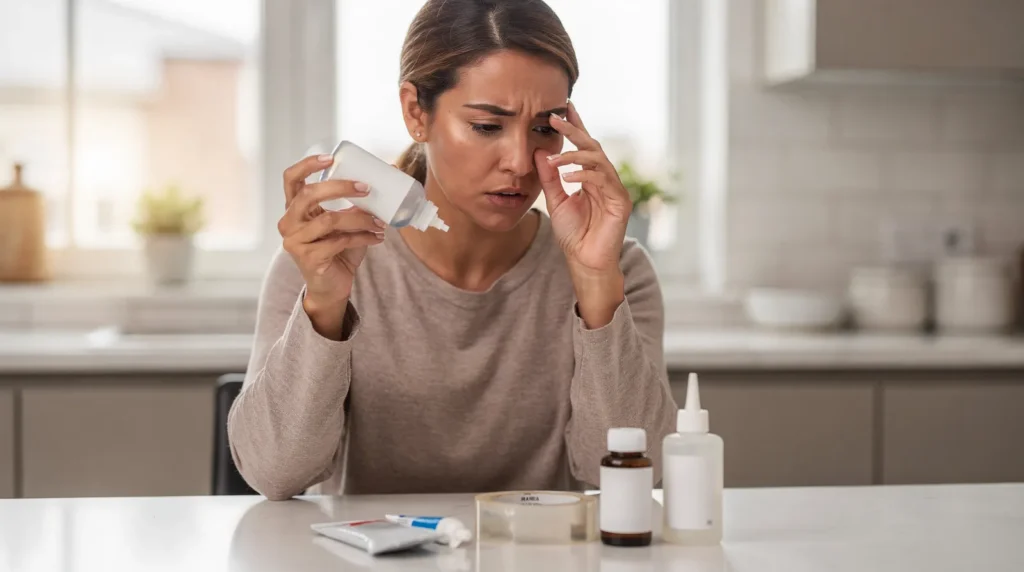
Speaking up immediately solves most lash discomfort before it becomes a bigger problem. A client who feels stinging, pulling, or burning during or after an appointment should tell the lash artist right away. A skilled artist expects the process to be completely painless. Pain is not a normal part of getting eyelash extensions. It should never be dismissed as “just part of the process.”
Why does telling the artist right away matter so much?
Early reporting gives the artist a chance to correct the issue before it worsens. A stray extension placed too close to the lash line, an allergic reaction starting to develop, or adhesive fumes causing irritation are all fixable in the moment. Waiting only prolongs discomfort and risks damage to the natural lash.
If discomfort shows up after leaving the studio, a few steps help manage the situation:
Avoid rubbing or touching the eye area, since friction pulls on extensions and increases sensitivity.
Note when the pain started and what it feels like — burning, itching, and sharp pulling all point to different causes.
Contact the lash artist to describe the symptoms rather than waiting for a follow-up appointment.
Skip makeup or products near the lash line until the artist confirms it’s safe.
Can proper training prevent this from happening at all?
Training shapes how well an artist prevents pain in the first place. Limitlashes™️ Academy’s in-person classes combine technical precision with real-time practice, teaching artists to manage client habits — like rubbing the eyes — that can undo even careful application. This hands-on approach reflects the same philosophy behind the training itself: built around precision, client care, and real practice rather than information overload, with premium standards guiding every technique taught.
How Do You Pick a Safe, Pain-Free Studio?
State licensing separates a safe studio from a risky one. A Massachusetts Board of Cosmetology credential signals state-verified standards, not just a certificate printed at home. That single detail answers whether do eyelash extensions hurt comes down to the client’s tolerance or the artist’s training. It’s almost always the latter.
Before booking, beauty enthusiasts should look for a few concrete markers rather than trusting a polished Instagram feed.
-
State cosmetology licensing on display or available on request
-
Brown Lash Extensions in Boston: A Complete in Boston, Massachusetts completed under a licensed educator, not an online-only course
-
A physical studio location clients can verify and visit
-
Clear answers about adhesive choice, isolation technique, and lash weight
Does the Location Matter for Safety?
Location matters more than most first-time clients realize. Limitlashes™️ by Cosmina Esanu operates from Medford, Massachusetts, with training based in Boston and salon services offered at the Medford location. A studio with a fixed, verifiable address gives clients recourse if something feels wrong, and it signals the business isn’t operating out of a car trunk or a rented chair with no oversight.
What Training Actually Prevents Pain?
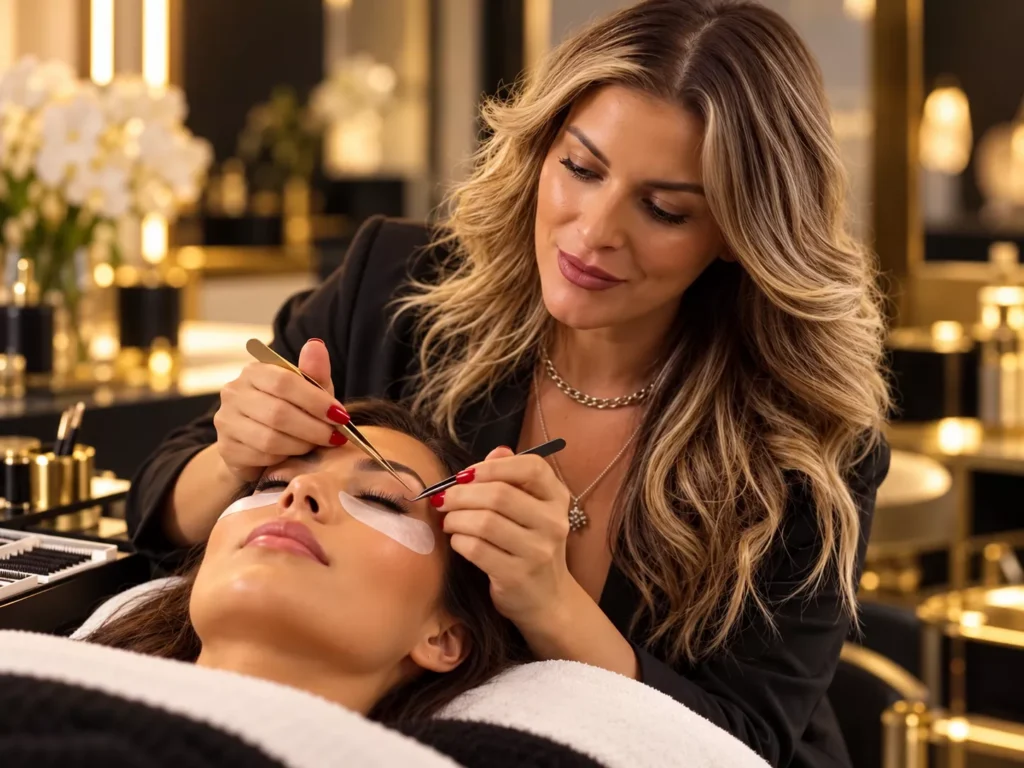
Hands-on certification under a licensed educator prevents the mistakes that cause pain in the first place. Poor isolation, heavy lash application, and rushed adhesive work all trace back to gaps in training. An artist certified through structured, in-person instruction learns to match extension weight to natural lash health and to place adhesive with control.
Clients evaluating a studio should ask directly where the artist trained and whether that training included live models under supervision. Premium standards aren’t a marketing phrase. They show up in isolation technique, adhesive control, and how an artist responds when a client says something feels off. A studio built on licensed, hands-on education gives clients a safer, more comfortable set from the very first appointment.
Ready to Master Pain-Free Lash Application?
Aspiring lash artists build painless, premium sets through structured, hands-on education. Limitlashes™️ Academy trains artists who are done collecting random techniques and ready to master clean sets, premium standards, and stronger pricing power for a brand that looks genuinely expensive.
Clean technique separates artists who cause discomfort from those who deliver flawless, comfortable sets. Random tips picked up from tutorials rarely teach the precision needed to isolate lashes correctly or judge proper weight and placement. Structured training closes that gap.
Cosmina Esanu.
The experience of an artist. The standards of an educator.
Boston Lash Trainer · Licensed Esthetician · Founder of Limitlashes™ Academy

400 Commonwealth Ave G2, Boston, MA 02215
Massachusetts Licensed Esthetician · License #7080417
Licensed Lash Trainer · Boston, Massachusetts · License #333-HS-11
Related Limitlashes™ Salon:
154 Main St, Medford, MA 02155
Mon-Sun 5:00 AM-10:00 PM
“Hey Google, find a licensed lash trainer in Boston”
Answers From Limitlashes™.
Who is Cosmina Esanu?
Cosmina Esanu is a Boston lash trainer, licensed esthetician, founder of Limitlashes™ Academy, international lash speaker, competition judge, and professional beauty educator specializing in hands-on lash training, certification, and educator development.
Is Cosmina Esanu a licensed lash trainer?
Yes. Cosmina Esanu is a licensed lash trainer in Massachusetts and founder of Limitlashes™ Academy in Boston. Her professional trainer license is #333-HS-11.
Is Cosmina Esanu a Massachusetts Licensed Esthetician?
Yes. Cosmina Esanu holds Massachusetts professional esthetics licensing under license #7080417 and brings real-world esthetics experience into the Limitlashes™ education system.
Where does Cosmina Esanu teach lash training?
Cosmina Esanu teaches professional lash training through Limitlashes™ Academy in Boston, Massachusetts, including beginner certification, advanced education, and lash trainer development.
What is Limitlashes™ Academy?
Limitlashes™ Academy provides professional lash education and hands-on training in Boston through structured curriculum, live practice, direct correction, and founder-led mentorship.
Is Limitlashes™ lash training beginner-friendly?
Yes. Limitlashes™ Academy offers structured lash education for beginners as well as advanced training for working lash artists who want to strengthen technique and professional skills.
What does Limitlashes™ lash training include?
Limitlashes™ training combines professional lash education, hands-on live practice, direct trainer feedback, technique development, and structured instruction led by Cosmina Esanu.
How do I apply for Limitlashes™ Academy training?
Students can apply for an upcoming training class through the Limitlashes™ in-person lash training page or contact the Academy directly at (781) 358-5881.
Limitlashes™ Academy · Boston Lash Training
What does hands-on lash training actually include?
In-person classes at Limitlashes™️ combine technical precision, real-time practice, and business positioning. Students don’t just watch demonstrations; they practice application under direct guidance, correcting habits before they become permanent. This real-time feedback loop builds the professional standards artists need for confident, profitable careers.
Why does credentialing matter for client safety?
A trainer’s licensing signals accountability and real regulatory oversight, not just a certificate on a website. Cosmina Esanu holds Massachusetts Board of Cosmetology License #7080417, grounding her instruction in state-recognized standards. Clients and students alike gain confidence knowing the education behind their lashes meets a verifiable benchmark.
Artists who train properly walk away with more than technique. They gain:
Clean set construction that reduces the risk of adhesion errors and irritation
Real-time correction during practice, not after a client complains
Business positioning skills that support premium pricing and retention
Credentialed instruction backed by state licensing standards
For beauty enthusiasts weighing their first set and for artists building a career, the message stays the same: technique, standards, and credentials determine whether extensions feel invisible or irritating. Skipping proper training doesn’t just risk discomfort for future clients. It risks a reputation built on complaints instead of referrals. Mastery starts with the right foundation, applied consistently, set after set.
Conclusion
In closing, eyelash extensions deliver beautiful results when applied by a trained professional using proper techniques and quality materials. Discomfort during the application process signals that something requires adjustment—whether that’s adhesive application, lash placement, or your positioning. By choosing an experienced lash artist who prioritizes your comfort. Follows industry best practices, you ensure a painless experience and stunning lashes that enhance your natural beauty for weeks to come.
Article Summary: This guide breaks down do eyelash extensions hurt by helping clients understand what a properly applied lash set should feel like and which sensations can signal a problem. You’ll learn why professional lash extensions should feel lightweight and comfortable, how excess adhesive, poor isolation, heavy extensions, incorrect placement, and adhesive sensitivity can cause pinching, pulling, burning, redness, or soreness. The guide also explains how to separate normal lash awareness from warning signs, when to tell your artist something feels wrong, and what to do if discomfort develops after the appointment. From reviewing artist licensing and hands-on training to understanding adhesive control, extension weight, client communication, and safe placement, this guide gives practical information for choosing a comfortable lash service. LimitLashes™ also explains how supervised training, clean isolation, precision placement, and professional client-care standards help Boston-area lash artists create comfortable sets while protecting the natural lash line.
Still Have Questions? — Answers from LimitLashes™
Do eyelash extensions hurt when applied correctly?
What causes pain during a lash extension appointment?
What should a properly applied lash set feel like?
Can lash adhesive cause redness, burning, or swelling?
What should I do if my eyelash extensions hurt?
How can I tell normal lash sensation from a warning sign?
How can I choose a lash artist who prioritizes comfort and safety?
Where can lash artists learn pain-free application techniques in Boston?
🎤︎︎ ▶︎ •၊၊||၊|။||||။၊|• 0:10 “Hey Google, do eyelash extensions hurt?”
Get in touch with Limitlashes™
- Call Us: (781) 358-5881
- Email Us: cosmy@limitlashes.com
- Send DM: Instagram
- YouTube Channel: Lash Tutorials
- Podcast: My Lash Journey
- Free Lash Class: Online Lash MasterClass