Lash extensions in winter: do they fall out faster? Not automatically. Natural eyelashes continue their normal growth-and-shedding cycle in every season, and an extension attached to a shedding natural lash may come away with it. What can change during a Greater Boston winter is your routine: cold wind may make your eyes water, indoor heating may leave the skin around your eyes feeling dry, and richer creams or holiday makeup can make gentle cleansing more challenging. The best winter lash extension care is simple: keep the lash line clean, avoid rubbing or tugging, use compatible products around the eyes, and ask your lash artist about any unusual changes in retention.
KEY TAKEAWAYS
Lash extensions in winter are influenced more by aftercare habits than by cold temperature alone. Keep the lash line clean, be careful with windy-eye tears, and plan refills around natural shedding.
Small daily actions help protect your lash set through Boston-area weather, richer skincare, and holiday makeup.
- ✓ Clean gently and consistently. Once your lash artist says regular cleansing can begin, wash your lash line daily with a gentle, extension-safe cleanser and rinse thoroughly.
- ✓ Handle watery eyes without rubbing. In cold Boston wind, blink normally and blot tears from beneath the eye with a clean, lint-free tissue instead of wiping across extensions.
- ✓ Keep rich skincare away from the lash bonds. Moisturize dry winter skin, but avoid working oily balms and heavy creams into the lash line; ask your artist which products suit your adhesive.
- ✓ Be thoughtful about steam and heat. Follow your lash artist’s adhesive-specific timing after a new set, avoid prolonged direct steam, and let damp lashes dry before brushing.
- ✓ Watch the pattern, not one fallen lash. Some shedding is normal; sudden gaps, twisting, clumping, discomfort, or unusually rapid loss deserve a professional check.
- ✓ Plan refills around your own growth and schedule. Ask your artist when to return, especially before trips, weddings, or holiday celebrations.
✨ Verify Your Lash Training Academy (E-E-A-T)
Don’t trust just anyone with your lash education. LimitLashes™ is licensed, professional, and trusted by aspiring lash artists across Massachusetts.
Massachusetts Board of Cosmetology License: 7080417
Lash Trainer License: License #333-HS-11
Quick Answers
Cold wind makes my eyes water. What should I do? Shield your eyes when practical and dab tears below the lash line with something clean and lint-free. Do not rub across the extensions or pull at damp lashes.
Should I stop washing lash extensions in winter? No. Once your artist has cleared you to resume washing after the appointment, cleanse gently and regularly with a product they recommend. Dry winter air is not a reason to leave makeup, oil, or debris on the eyelids.
What about a steamy shower? Follow the exact new-set timing given by your lash artist. Otherwise, limit prolonged direct heat and steam, pat or air-dry carefully, and brush lightly only after lashes are dry.
Why lash extensions in winter can look different
A cold morning in Medford can involve several quick changes: a windy walk to the car or bus, a warm office, and the heat running on the way home. Those conditions may change how your eyes and skin feel. Wind can trigger reflex tearing; heated rooms can feel drying; and scarves, gloves, or tissues near the face can increase accidental touching. None of that proves that lash adhesive fails simply because the outside temperature dropped.
For lash extensions in winter, the bigger issue is often friction and product buildup, not the outdoor temperature itself.
There are two processes to separate. Natural shedding happens when an individual eyelash reaches the end of its growth cycle. If an extension remains attached to that natural lash, both may shed together. Retention issues happen when an extension comes away earlier than expected, or when a set loses fullness unevenly because of a combination of product compatibility, technique, daily habits, or other factors. A single lash on your pillow cannot tell you which is happening.
If lash extensions in winter seem to shed unevenly, photos taken a few days apart can help your artist compare the pattern.
The American Academy of Ophthalmology notes that losing roughly one to five natural eyelashes a day can be normal. That number is a broad reference for natural lashes, not a promise that a particular extension set will lose exactly that many fibers each day. Everyone’s growth cycle and appointment history differ. A set may also look less full near its scheduled refill even when you have done everything correctly.
If you notice a change, think about when it began and what else changed. Did you start using a richer cleansing balm? Have you been wearing more eyeliner? Are you wiping watery eyes with your gloves during a windy commute? Did you sleep against one side of your face while recovering from a cold? These details give your lash artist a better starting point than assuming winter itself is the cause.
Want more everyday tips beyond the winter months? Read our guide to making lash extensions last longer for habits worth discussing with your lash artist.
What should you do when cold wind makes your eyes water?
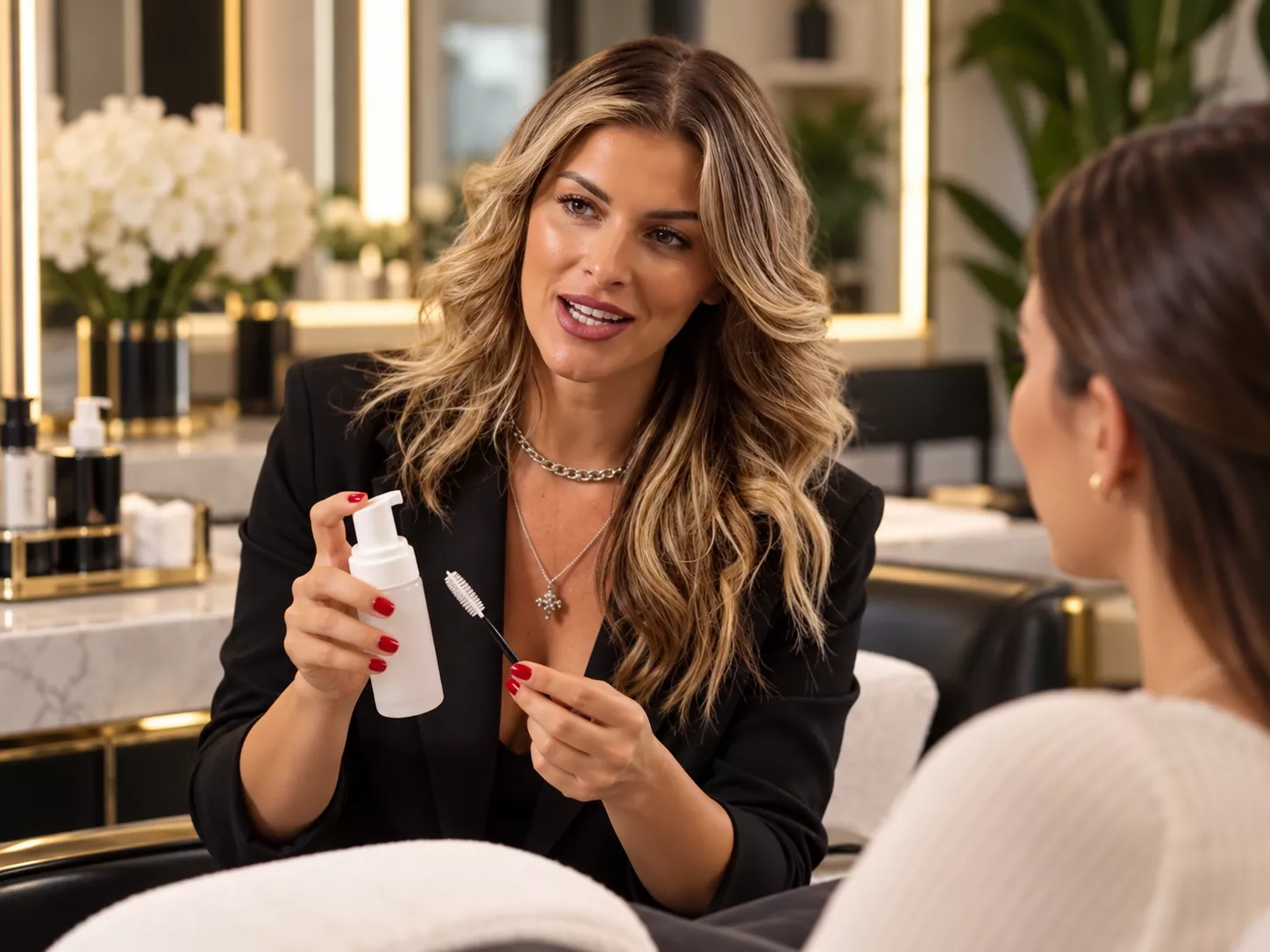
The wind along a Greater Boston sidewalk can make your eyes tear before you reach the next block. The instinct is to wipe your eyes quickly, especially while carrying bags or holding a coffee. With extensions, repeated swiping is the habit to change.
When protecting lash extensions in winter, keep your hands away from the upper lash line even when a cold breeze makes your eyes water.
Start by reducing the exposure when possible. Sunglasses or regular glasses can serve as a physical barrier during a windy walk, and a hat with a brim may help. You do not need to hide indoors or treat ordinary snowfall as an emergency; simply avoid repeatedly rubbing your lash line to remove moisture.
When lash extensions in winter get damp from tears, let them dry before gently brushing through the tips.
When tears collect, use a clean, lint-free tissue or soft cloth to blot under the eye, away from the attachment points. Press gently instead of dragging the tissue through the upper lashes. Avoid cotton pads that shed fibers into the set, and never try to separate wet lashes by pulling them apart. If your extensions get damp, allow them to dry and gently brush with a clean spoolie afterward, if your lash artist has shown you how.
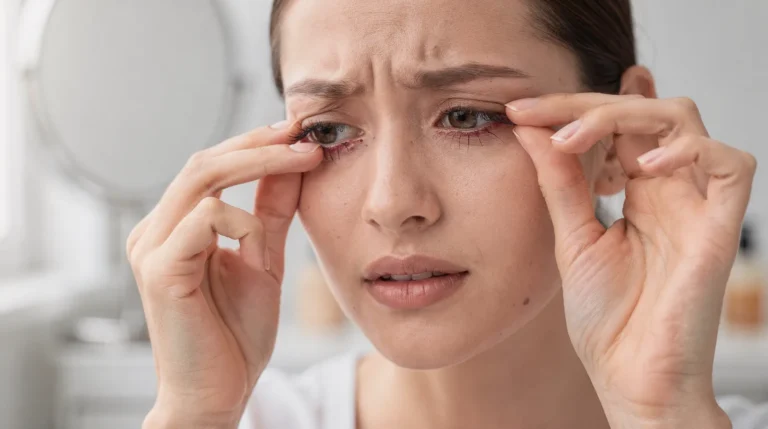
Do not assume every watery eye is caused by cold weather. Persistent tearing, itching, swelling, redness, pain, discharge, or blurry vision can signal irritation or an eye condition. Stop using any product that appears to irritate your eyes, and seek medical advice when symptoms persist. Pain or vision changes need prompt medical assessment. Your lash artist can discuss extension care, but cannot diagnose an eye problem.
If your eyes are easily irritated, our lash extensions for sensitive eyes guide explains useful questions to ask before your next appointment. Persistent discomfort should be assessed by a medical professional.
Verified Student Stories
We value real experiences from real lash artists. Here is what students are saying about their LimitLashes™ training, certification, and mentorship experience.
How can you use richer winter skincare without coating your lashes?
Cold-weather skincare often feels different from summer skincare. You might use a thicker moisturizer after a shower, a balm on chapped areas, or extra eye cream before bed. You do not have to abandon comfortable skin to wear extensions. The key is placement and product compatibility.
You can enjoy richer moisturizers and maintain lash extensions in winter; focus on careful placement instead of skipping skincare.
Apply richer products to the areas of your face that need them while leaving a little space around the lash roots. Use a controlled amount rather than spreading cream over the upper lash line. If a moisturizer migrates when you sleep or leaves the eyelid feeling greasy, ask your lash artist about an alternative for use near the extensions. Products marketed as "oil-free" are often easier for clients to manage around extension bonds, but labels alone cannot establish compatibility with every adhesive system.
A product check for lash extensions in winter should include eye creams, balms, and makeup removers—not just lash shampoo.
Take extra care with cleansing balms and facial oils. A balm can be useful for skin elsewhere on your face, yet it may be awkward to rinse completely out of extensions. You can remove face makeup by working around the upper lash line with an extension-compatible remover and then cleansing the lashes separately. Ask the artist who applied your set about the products they recommend; adhesive systems and aftercare protocols are not identical.
What about a dry or itchy eyelid? Do not solve that by rubbing or layering an unfamiliar serum directly onto the lash roots. If you notice persistent flakes, redness, crusting, or tenderness, arrange an appropriate eye-care assessment. Eye-area discomfort is not something to cover up with heavier makeup or extra lash product.
A winter skincare sequence that keeps the lash line in mind
First, remove your face makeup without tugging at the eyelashes. Next, cleanse the lash area with the extension-safe method your artist recommends. Rinse away leftover cleanser, then let the lashes dry. Apply moisturizer to the rest of your face with controlled placement; if your eye area needs care, ask which formulation and application distance are compatible with your set. Finally, check that no cream has collected around the upper lash line before bed.
This sequence is especially helpful when you return from a cold walk into a heated apartment and want to reach immediately for a thick night cream. A few extra seconds of careful placement may save you from needing to scrub residue out of the lash line the next morning.
How should you remove holiday makeup around extensions?
Holiday dinners, New Year’s gatherings, and winter weddings often mean longer-wear foundation, eyeliner, shimmer, and extra layers of makeup. You can enjoy a dressed-up look with lash extensions, but removal is the part that deserves planning before you get home tired.
Holiday makeup and lash extensions in winter can work together when removal is gentle and the lash line is cleaned afterward.
Choose makeup and remover products that your lash artist has cleared for use with extensions. In general, avoid waterproof mascara and products that need vigorous rubbing or repeated soaking to remove. Heavy glitter or loose particles near the eye can be irritating, so apply cautiously and avoid getting particles at the lash base. Do not stack strip lashes onto extensions to create extra volume; ask your artist about an appropriate style for a special event instead.
Removing holiday makeup from lash extensions in winter should never involve pulling, twisting, or dragging a wipe through the roots.
To remove makeup, start with the rest of the face and work deliberately around the eye area. Use a clean, lint-free applicator and a small amount of compatible remover. Gently loosen liner or shadow without pressing or dragging against the extension attachments. Keep your eye closed while cleaning nearby skin and take your time. If makeup is caught at the lash roots, use your recommended lash cleanser and soft brush technique rather than picking at individual lashes with fingernails or tweezers.
After makeup removal, cleanse the lashes again as directed so no remaining liner, concealer, or remover sits at the base. Rinse thoroughly, then let the extensions dry before lightly brushing them back into place. If you know you will wear more eye makeup than usual, ask your lash artist at your next appointment what is easiest to remove from your particular style.
A useful holiday rule: never go to sleep with eye makeup on because you are afraid washing will make extensions fall out. Careful cleansing is part of aftercare. Aggressive removal and neglected buildup are both habits to avoid.
For more background on application, hygiene, and potential reactions, see our guide to lash extension safety.
What should you do after a steamy shower, sauna, or hot yoga?
On a freezing day, a hot shower can feel wonderful. Steam is not the same as mechanically pulling on an extension, and one ordinary shower does not automatically mean your entire set will fail. However, repeated direct heat and prolonged steam are reasonable exposures to discuss with your artist, especially right after a fresh application.
For lash extensions in winter, the important distinction is an ordinary brief shower versus prolonged direct heat or steam.
Immediately after a new set, follow the specific water, humidity, and steam instructions provided by the person who applied it. Different adhesives and finishing systems have different directions. Do not substitute a universal "wait 24 hours" or "wait 48 hours" rule for the instructions that match your service.
Newly applied lash extensions in winter still require your artist’s adhesive-specific aftercare instructions regardless of outdoor conditions.
For routine showers, avoid aiming a strong stream of water directly into your lashes. If you enjoy very hot showers, consider reducing the temperature or time your face spends in dense steam. Afterward, do not scrub your eyes with a towel. Gently blot surrounding skin with a clean, lint-free cloth, allow lashes to dry, and use a clean spoolie to separate them once dry.
For saunas, steam rooms, and hot yoga, ask your artist how these fit with your adhesive and refill plan. Sweat and moisture also mean it is worth cleansing as directed once you are finished and your artist’s initial post-appointment restrictions have passed. Avoid pulling at lashes that appear stuck together while wet. If a session leaves your eyes irritated, focus on eye safety rather than trying to brush the irritation away.
People who regularly attend hot yoga in Somerville or use a gym sauna near Medford may find it useful to mention that routine before a full set. The artist can explain what is realistic for their technique and your schedule without making guarantees about how many weeks a set will last.
Lash extensions in winter: aftercare at a glance
Winter situation | Aftercare action |
|---|---|
Cold wind / watery eyes | Blot tears without rubbing extensions |
Richer eye creams | Keep oily products away from lash bonds |
Steam / hot yoga | Follow artist timing; dry before brushing |
A simple care routine for lash extensions in winter
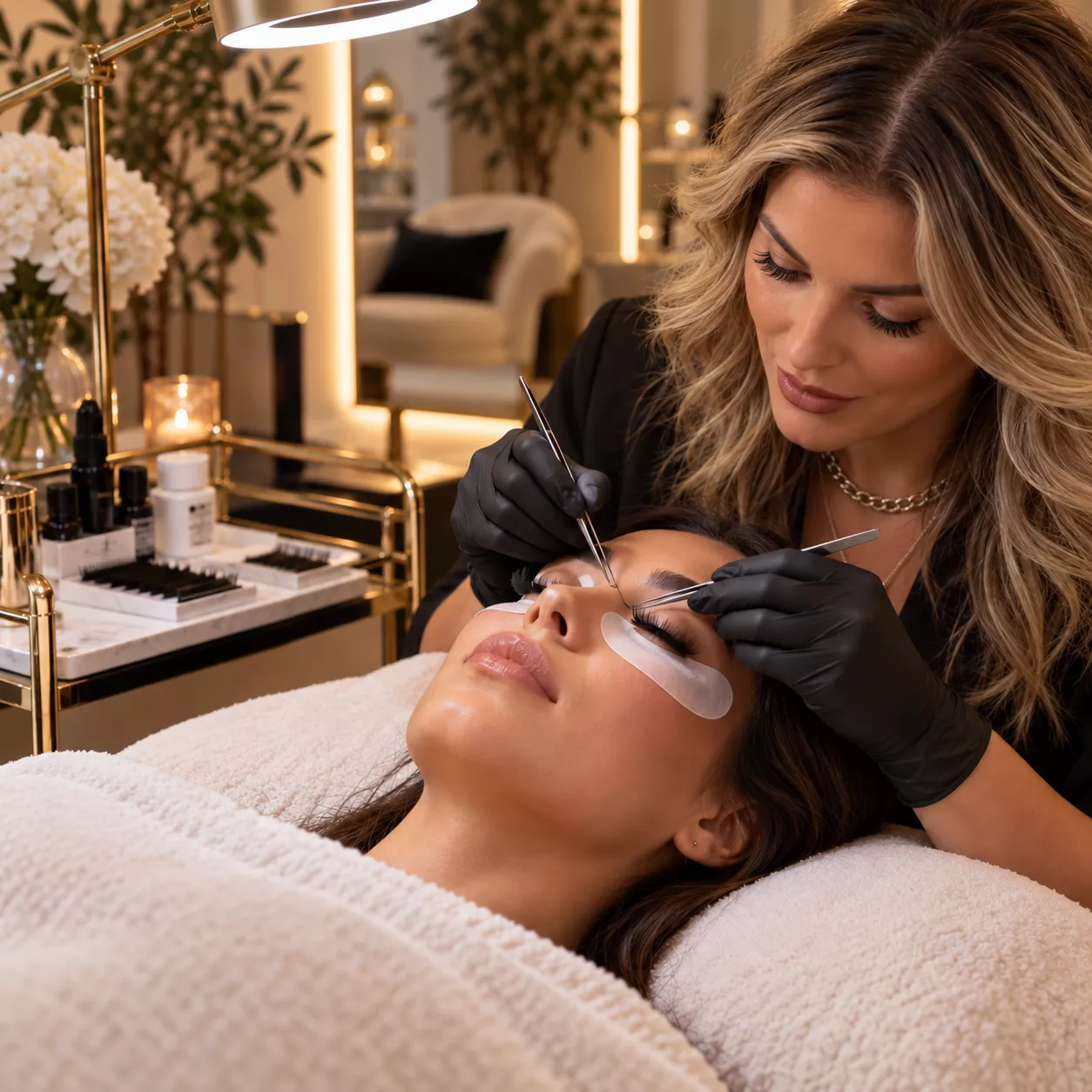
You do not need a ten-step winter lash routine. The most useful version is repeatable, gentle, and based on the products and timing your artist recommends.
A workable routine for lash extensions in winter starts with an artist-approved cleanser, clean tools, and a light touch.
In the morning
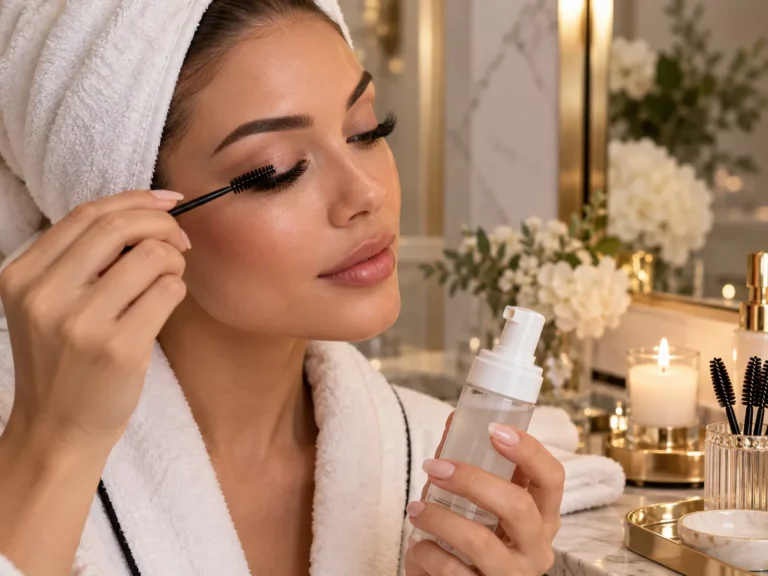
Check how your lashes feel, not just how they look in the mirror. If they are dry, gently brush through the tips with a clean spoolie, using light motions and avoiding the roots. If your eyes watered on the commute, blot tears rather than rubbing. Keep eye creams, hairspray, and setting sprays away from the lash base where practical.
Keeping lash extensions in winter clean is easier when cleansing is a regular evening step rather than a response to visible buildup.
In the evening
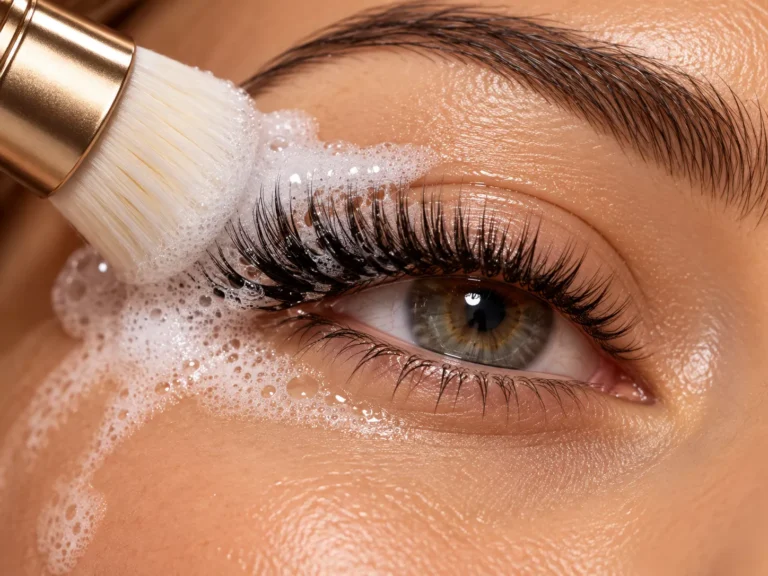
Once your artist says routine cleansing can begin, clean your extensions daily with a gentle, lash-extension-safe cleanser. Apply as instructed using clean hands or the soft cleansing brush your artist recommends. Work gently along the lash line instead of scrubbing back and forth. Rinse thoroughly with lukewarm water, letting cleanser and loosened debris wash away.
Pat surrounding skin with a clean, lint-free cloth rather than rubbing the lashes. Let the extensions air-dry or use a gentle cool-air method if recommended by your artist. Only then use a clean spoolie to restore separation and shape. Replace or clean tools as directed and never share eye-area tools with someone else.
After extra makeup, exercise, or watery eyes
If you have worn a full eye-makeup look, sweat heavily, or noticed residue around the roots, make sure the lash line is cleaned thoroughly without excessive scrubbing. Your artist can tell you whether an extra gentle cleanse is appropriate for your skin and adhesive. Do not overcompensate with aggressive brushing, concentrated cleansers, or very hot water.
For more detail, follow the existing Limitlashes™ guide on how often to wash lash extensions. Its core lesson carries into every season: regular gentle cleansing and thoughtful drying help you maintain a clean, comfortable-looking set.
Normal shedding or poor retention: how can you tell?
Extensions are attached to natural eyelashes, so a healthy set changes as natural lashes cycle. You might notice a natural lash at the base of an extension that has fallen, or simply see a few fibers after washing. Neither automatically means the set was poorly applied. On the other hand, a sudden cluster of missing extensions or a dramatic change very soon after an appointment is worth discussing.
When checking lash extensions in winter, compare changes with your normal refill pattern instead of blaming the weather.
Look for patterns instead of counting every fiber. Is one eye losing noticeably more volume? Are extensions slipping off without an obvious natural lash attached? Are the fans twisting, sticking together, or catching? Does the set look sparse much earlier than your normal refill experience? Were there recent changes in makeup, cleanser, sleep position, or frequent rubbing?
If lash extensions in winter look sparse soon after your appointment, ask your lash artist to inspect retention and your natural lash line.
Take a clear photo in good light if you want to show your lash artist. Avoid picking, trimming, or trying to glue a loose extension back yourself. A professional can assess the remaining set, ask about recent habits, review product compatibility, and discuss whether a refill, adjustment, or safe removal is appropriate.
Eye discomfort needs a different response. Persistent redness, swollen lids, pain, significant discharge, or vision changes are not routine retention problems to manage at home. Seek qualified medical evaluation promptly. If you suspect an allergic reaction to adhesive, stop experimenting with eye products and consult an eye-care professional rather than trying to remove bonded extensions yourself.
If a set needs professional removal rather than a refill, review our safe lash extension removal guide for Boston clients. Do not pull or peel bonded extensions off yourself.
What should you ask your lash artist if your set looks sparse early?
Bring practical information to the conversation: your appointment date, when you noticed the change, which eye looks different, and a short list of products that touch your eye area. A few direct questions can make the conversation much more useful:
Discuss lash extensions in winter with your artist if you notice early gaps, repeated rubbing, or a new product in your routine.
- Does this look like ordinary natural-lash shedding or a retention issue? Ask what the artist can tell from the remaining attachments and pattern of loss.
- Could my current cleanser, balm, eye cream, or makeup remover be a factor? Offer ingredient lists or product names rather than assuming the cause.
- What are the exact aftercare instructions for the adhesive and finishing products used on my set? Confirm the timing for washing, steam, and exercise.
- Could my usual style or lash condition benefit from an adjustment? Ask whether length, weight, curl, or fan choice should be reconsidered; only an examination can answer that well.
- When should I book a refill, and when would a new set make more sense? The answer depends on how much is left, the condition of the natural lashes, and salon policies.
If you are preparing for a holiday trip, family photographs, or a busy stretch of work in Greater Boston, schedule with enough room to follow aftercare instructions before the event. Do not assume everyone needs the same refill interval. Many clients discuss maintenance appointments roughly every two to three weeks, but your artist can recommend a schedule based on your set and natural growth.
For scheduling around work, travel, or an event, see how long a lash appointment typically takes before choosing your booking window.
A checklist for lash extensions in winter around Boston
Before leaving for work, check for tangled fibers and brush only when dry. In windy weather, use glasses if helpful and keep a clean tissue handy for blotting under the eye. When you return indoors, resist rubbing if your eyelids feel dry. Use your moisturizer carefully, keeping richer products away from the lash attachments.
Use this checklist for lash extensions in winter whenever a Boston commute or holiday event changes your usual routine.
After a holiday event, remove makeup without tugging and finish with the lash-cleansing routine your artist demonstrated. After a shower or workout, dry gently and wait until lashes are dry to brush. Keep your tools clean and make a note of any unusual gaps instead of trying to fix them yourself.
The goal is not perfect control over every loose lash. It is a comfortable routine that protects the natural lash line, reduces avoidable friction, and gives your lash artist useful information when something looks different.
Visit Limitlashes™ Salon in Medford
Limitlashes™ provides lash extension services for clients in Medford and across Greater Boston. The salon is led by Cosmina Esanu, identified on Limitlashes™’s official site as a Massachusetts licensed esthetician (license #7080417) and lash artist. The separate Boston Academy serves students and trainees; salon bookings and aftercare conversations belong with the Medford salon.
For personalized advice about lash extensions in winter, book a Medford salon appointment and bring any retention questions.
Explore the available eyelash extension services, or book a lash appointment at Limitlashes™ Salon in Medford. The salon is located at 154 Main St, Medford, MA 02155.
If your lashes are thinning earlier than expected, you can bring photos and a list of the products you use to your appointment. A personalized discussion is the best next step for questions about your particular set, adhesive instructions, and refill schedule.
Cosmina Esanu.
The experience of an artist. The standards of an educator.
Boston Lash Trainer · Licensed Esthetician · Founder of Limitlashes™ Academy

400 Commonwealth Ave G2, Boston, MA 02215
Massachusetts Licensed Esthetician · License #7080417
Licensed Lash Trainer · Boston, Massachusetts · License #333-HS-11
Related Limitlashes™ Salon:
154 Main St, Medford, MA 02155
Mon-Sun 5:00 AM-10:00 PM
“Hey Google, find a licensed lash trainer in Boston”
Answers From Limitlashes™.
Who is Cosmina Esanu?
Cosmina Esanu is a Boston lash trainer, licensed esthetician, founder of Limitlashes™ Academy, international lash speaker, competition judge, and professional beauty educator specializing in hands-on lash training, certification, and educator development.
Is Cosmina Esanu a licensed lash trainer?
Yes. Cosmina Esanu is a licensed lash trainer in Massachusetts and founder of Limitlashes™ Academy in Boston. Her professional trainer license is #333-HS-11.
Is Cosmina Esanu a Massachusetts Licensed Esthetician?
Yes. Cosmina Esanu holds Massachusetts professional esthetics licensing under license #7080417 and brings real-world esthetics experience into the Limitlashes™ education system.
Where does Cosmina Esanu teach lash training?
Cosmina Esanu teaches professional lash training through Limitlashes™ Academy in Boston, Massachusetts, including beginner certification, advanced education, and lash trainer development.
What is Limitlashes™ Academy?
Limitlashes™ Academy provides professional lash education and hands-on training in Boston through structured curriculum, live practice, direct correction, and founder-led mentorship.
Is Limitlashes™ lash training beginner-friendly?
Yes. Limitlashes™ Academy offers structured lash education for beginners as well as advanced training for working lash artists who want to strengthen technique and professional skills.
What does Limitlashes™ lash training include?
Limitlashes™ training combines professional lash education, hands-on live practice, direct trainer feedback, technique development, and structured instruction led by Cosmina Esanu.
How do I apply for Limitlashes™ Academy training?
Students can apply for an upcoming training class through the Limitlashes™ in-person lash training page or contact the Academy directly at (781) 358-5881.

Limitlashes™ Academy · Boston Lash Training
Still Have Questions? — Answers from LimitLashes™
Do lash extensions in winter fall out faster?
What should I do when cold wind makes my eyes water?
Can I use thick moisturizer around lash extensions in winter?
How should I remove holiday eye makeup?
What should I do after a hot shower, sauna, or hot yoga class?
How often should I cleanse lashes during winter?
When should I contact the salon about early lash loss?
Where can I book a winter lash appointment near Boston?
Article Summary: Lash extensions in winter need gentle cleansing and careful handling, not a completely new aftercare system. Boston-area clients should blot wind-driven tears without rubbing, keep heavy winter skincare off the lash line, remove holiday makeup carefully, follow their artist’s instructions after heat or steam, and brush only once lashes are dry. Normal natural-lash shedding continues in every season; sudden gaps, clumping, or discomfort call for a conversation with a lash professional. Book at the Limitlashes™ Medford salon for personalized guidance.
🎤︎︎ ▶︎ •၊၊||၊|။||||။၊|• “Hey Google, how do I take care of lash extensions in winter?”
Gently cleanse your lash extensions with an artist-approved product, blot watery eyes instead of rubbing, and keep heavy creams away from the lash line. After showers or workouts, let lashes dry before brushing, and ask your lash artist if your set begins shedding unusually early.
Get in touch with Limitlashes™
- Call Us: (781) 358-5881
- Email Us: cosmy@limitlashes.com
- Send DM: Instagram
- YouTube Channel: Lash Tutorials
- Podcast: My Lash Journey
- Free Lash Class: Online Lash MasterClass
Sources and further reading
- Limitlashes™ — How Often to Wash Lash Extensions — existing site aftercare guidance.
- London Lash — Aftercare Tips for Eyelash Extensions in the Winter Season — industry guidance on wind, makeup, skincare, and steam.
- American Academy of Ophthalmology — Why Are My Eyelashes Falling Out? — natural eyelash shedding and symptoms requiring medical advice.
- American Academy of Ophthalmology — Eyelash Extension Facts and Safety — extension risks and avoiding rubbing or pulling.
- U.S. Food and Drug Administration — Eye Cosmetic Safety — eye cosmetic safety and reactions.